Need garage door spring repair in Palo Alto?
Tell us what your garage door is doing and when you are home. We will point you to a local provider, with no obligation to hire.
No obligationGarage Door Repair Referrals in the Palo Alto area
Compare quotes, then decide
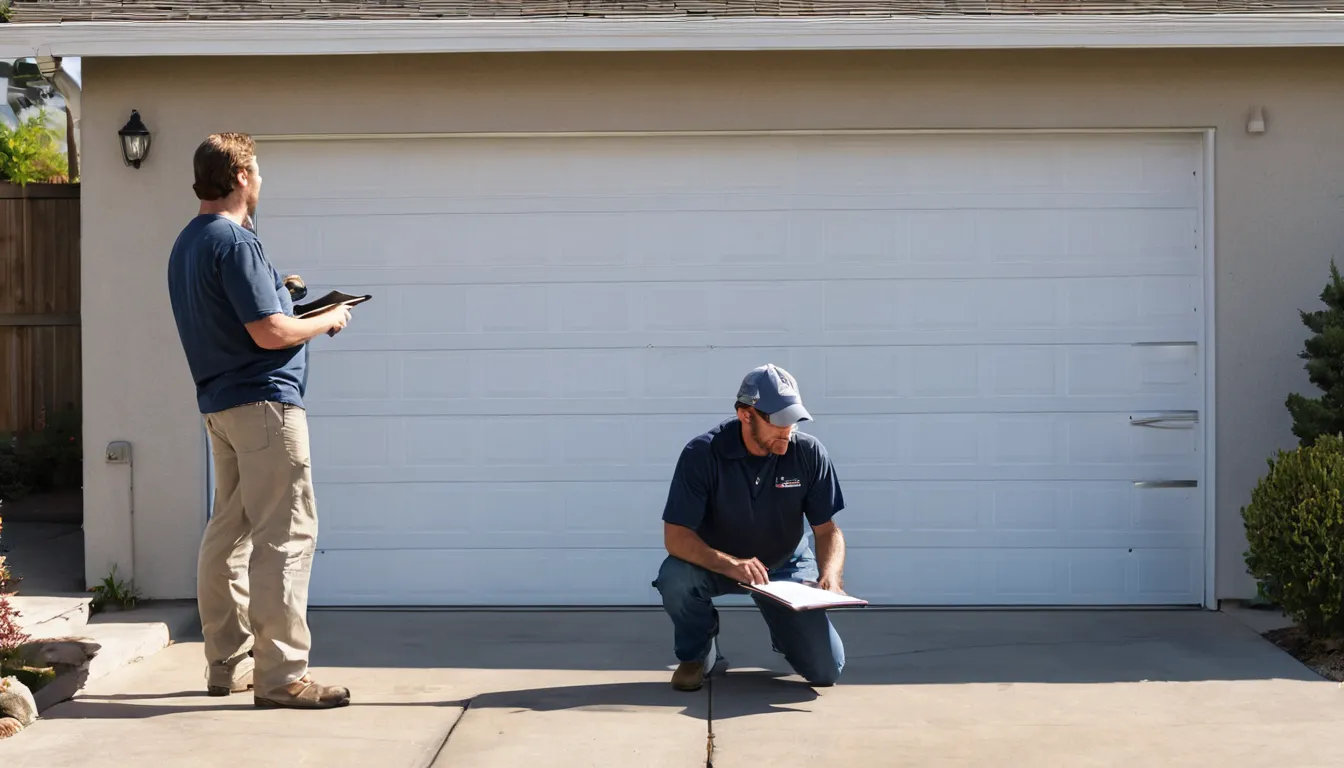
A garage door spring does the heavy lifting every time the door moves. When it snaps, the door can feel stuck, crooked or far too heavy. It is a common problem in busy homes, where the door opens and closes many times a day.
Footethnic Garage Doors is a referral service for homeowners in the Palo Alto area. We connect you with independent providers in our network who handle garage door spring repair. They do the work, not us. You can request an estimate, compare quotes in writing, and decide at your own pace with no obligation. This page explains the warning signs, the two main spring types, and the questions worth asking before you agree to a price.
A sharp crack from the garage often means a spring has let go. The door may now feel heavy, or it may not lift at all. Take a breath. This is a common repair, and you do not need to rush into the first price you hear.
A few simple steps keep everyone safe while you sort out a plan.
Sometimes the sign is obvious. Other times it is quieter. Look for these clues:
If you see any of these, treat the door as unsafe to use until a provider has looked at it.
Most garage doors use one of two spring types. Torsion springs sit on a bar above the door. They twist to store energy. Extension springs run along both sides of the door and stretch as it closes.
Many 1950s to 1980s tract homes have extension springs. Newer or heavier doors tend to use torsion. The type matters for your quote, because the parts and the labor differ.
Springs hold a lot of stored force. A slipped tool or a loose fitting can cause serious injury. Online videos make it look simple, but the right winding bars, the right spring size and a steady hand all matter. A wrong size can leave the door unbalanced and wear out your opener early.
If the car is stuck inside or the door will not close, you may want help quickly. Many providers can respond quickly, but availability and hours vary by provider. Request a callback to check provider availability in your area. Urgent visits can cost more, so ask about that before you agree.
A typical visit follows a clear path.
Ask for the parts and labor to be listed in writing. Quote in writing, so nothing is a surprise later.
If you have two springs, many providers suggest replacing both. They wear at the same rate, so the second one often follows soon after. Pairing the job can save you a second visit and a second service fee. Ask the provider to explain their reasoning.
A cycle is one open and one close. Standard springs are often rated for around 10,000 cycles. High-cycle springs are rated for more, sometimes two or three times that.
Here is the math for a busy household. Four trips a day is about 1,460 cycles a year. A standard spring might last roughly seven years at that pace. If your family comes and goes a lot, a high-cycle spring may cost more now but spread the cost over more years. That is a trade-off worth weighing.
A broken spring can knock the door off its path. A good visit includes a look at track alignment, rollers and cable wear. Bent or loose tracks can make a new spring work harder. Fixing them at the same time is often cheaper than coming back later.
Not every stuck door is a spring problem. If the door lifts easily by hand but the opener will not move it, the opener may be the issue. If the opener is old and noisy, a provider may talk to you about a new garage door opener. Do not buy one until the spring and balance are checked, because a bad spring can strain a new motor.
A spring repair is usually a short visit, so it can fit around school runs and work. When you request an estimate, mention your busy times. Ask whether the provider can offer a time window that suits you. Hours and scheduling vary, so confirm the details directly.
Dry seasons and winter rain can both take a toll. Dust, damp and rust can wear springs faster, so a quick check each year is a sensible habit.
Two or three written quotes show you the real range. Look past the bottom line. Check the spring type, the cycle rating, whether both springs are included, and what is said about parts and labor. A slightly higher quote with better parts can be the fairer deal.
A clear, calm answer is a good sign. You can say no, ask for another quote, and take your time. There is no obligation.
The provider checks your door's weight and spring type so the new spring matches it properly.
Broken springs are released and removed carefully, then replaced and tensioned.
Cables, rollers and brackets are looked over, since worn parts strain new springs.
Tracks are checked for alignment, then the door is tested by hand and opener.
Spring repair prices vary by door size, spring type, parts and the provider. These are typical U.S. ranges only. Your own quote may be higher or lower, so ask for a written quote that lists parts and labor.
| Item | Typical range | Notes |
|---|---|---|
| Single torsion spring replacement | $150 – $350 | Includes labor; price depends on size and door weight |
| Pair of torsion springs | $200 – $450 | Often suggested so both wear evenly |
| Pair of extension springs | $100 – $250 | Common on older tract homes; safety cables matter |
| High-cycle spring upgrade | $75 – $250 | Extra cost for a longer rated life |
| Cable or roller replacement | $100 – $250 | Sometimes found when the spring is checked |
| Track alignment or adjustment | $75 – $200 | Varies with how bent or loose the track is |
Stop using the door, keep kids and pets away, and note what you saw or heard.
Tell us about your door and the problem, and a local provider will follow up.
Look at spring type, cycle rating, parts and labor before you choose.
Pick a provider, confirm the time window and let them handle the repair.
Providers in our network do the work, so you deal directly with them.
You can compare itemized quotes side by side and see where the money goes.
Request an estimate and take your time. There is no obligation to book.
Share your busy times, and ask the provider about scheduling that suits your household.
Tell us what your garage door is doing and when you are home. We will point you to a local provider, with no obligation to hire.
No obligationCommon signs include a loud bang, a door that lifts only a few inches, an opener that strains, a visible gap in the coil, or a crooked door. Stop using the door and ask a provider to inspect it.
It is not recommended. Springs hold a lot of stored force, and the wrong tools or size can cause injury or leave the door unbalanced. A local provider has the right equipment and experience.
Typical U.S. prices run from about $100 to $450 depending on spring type, size and whether you replace one or a pair. Costs vary by job, so compare written quotes before you decide.
Tell us what your garage door is doing and when you are home. We will point you to a local provider, with no obligation to hire.
No obligation